How to Save Money on Groceries: 8 Proven Strategies
Groceries are most people's second or third largest expense — and one of the most flexible. Unlike rent or car payments, grocery spending can be optimized significantly without sacrificing nutrition or enjoyment. The average American household spends $475/month on groceries, but with the right strategies, you can cut that by 20-40% while eating just as well.
1. How Much Are You Actually Spending?
Before optimizing, you need a baseline. Most people dramatically underestimate their grocery spending because they forget about the "quick stop" mid-week trips, the convenience store purchases, and the premium items that add up.
| Household size | USDA thrifty plan | USDA moderate plan | USDA liberal plan |
|---|---|---|---|
| 1 adult | $215/mo | $300/mo | $375/mo |
| 2 adults | $410/mo | $560/mo | $700/mo |
| Family of 4 | $700/mo | $950/mo | $1,200/mo |
2. Meal Planning 101
Meal planning is the single highest-impact grocery savings strategy. It eliminates the three biggest budget killers: impulse purchases, food waste, and last-minute takeout.
The simple method (30 minutes/week)
- Check what you already have. Open your fridge, freezer, and pantry. What needs to be used before it expires? Build meals around those ingredients first.
- Plan 5-6 dinners. Leave 1-2 nights for leftovers or a "clean out the fridge" meal. Don't plan 7 unique dinners — that's overambitious and leads to waste.
- Keep breakfasts and lunches simple. Rotating between 2-3 options for each is enough. Oatmeal, eggs, sandwiches, grain bowls — variety is overrated for weekday meals.
- Write the shopping list from the meal plan. Only buy what you need for the planned meals, plus staples. Nothing else.
- Shop once per week. Every additional trip to the store adds $20-40 in unplanned purchases. One focused trip with a list beats three "quick stops."
3. Store Brand vs Name Brand
This is the easiest switch with the biggest payoff. Store brands (Kirkland, Great Value, Market Pantry, 365 by Whole Foods) cost 20-40% less than name brands — and in most cases, the quality is identical.
The savings math
| Item | Name brand | Store brand | Savings |
|---|---|---|---|
| Cereal (family size) | $5.49 | $3.29 | $2.20 (40%) |
| Pasta sauce | $4.99 | $2.49 | $2.50 (50%) |
| Butter (1 lb) | $5.99 | $4.29 | $1.70 (28%) |
| Greek yogurt (32oz) | $6.49 | $4.49 | $2.00 (31%) |
| Frozen vegetables | $3.49 | $1.99 | $1.50 (43%) |
| Canned beans | $1.89 | $0.89 | $1.00 (53%) |
| Cheese (block) | $6.99 | $4.99 | $2.00 (29%) |
Switching to store brands across your regular grocery list typically saves $50-100/month. Over a year, that's $600-1,200 — enough to fund a sinking fund or make extra debt payments.
When name brand is worth it
Some items have noticeable quality differences: specific coffee brands, condiments with unique flavors (Sriracha, Dijon mustard), and certain cleaning products. Try the store brand first — if you notice a difference, switch back for that specific item.
4. Unit Price Comparison
The unit price is the cost per ounce, per pound, or per item — and it's the only honest way to compare prices. The larger package isn't always cheaper per unit, and the "sale" price isn't always a better deal.
How to read unit prices
Most stores display unit prices on the shelf tag in small print (price per oz, price per ct, etc.). Always compare the same unit between products. A 12 oz jar at $3.49 ($0.29/oz) is cheaper per unit than a 6 oz jar at $2.19 ($0.37/oz) — even though the sticker price is lower.
Buying in bulk: when it works
- Non-perishables: Rice, pasta, canned goods, toilet paper, cleaning supplies — buy the largest size for the lowest unit price.
- Frozen items: Frozen vegetables, meat, and bread last months. Bulk buying saves 15-30%.
- Items you use every day: Coffee, cooking oil, eggs, milk — the high turnover means nothing goes to waste.
Buying in bulk: when it fails
- Perishables you can't freeze: Fresh produce, dairy, bread — if it expires before you eat it, the "savings" become waste.
- Items you rarely use: That giant bottle of specialty sauce will sit in the fridge for 18 months. Buy the small one.
- Snacks and treats: Having a Costco-sized box of cookies leads to eating more, not saving more.
5. Shopping List Discipline
The shopping list is a spending plan. Without one, the average shopper makes 8-12 impulse purchases per trip, adding $30-60 to the bill. With a strict list, you buy only what you need.
Rules for effective list shopping
- Write the list from your meal plan. Every item on the list should be connected to a planned meal or a household staple.
- Never shop hungry. This sounds cliche, but hunger increases impulse purchases by 64% according to a study in JAMA Internal Medicine.
- Skip the inner aisles. The perimeter of the store has fresh produce, meat, dairy, and bread. The inner aisles have processed, packaged, and higher-margin items. Shop the perimeter first.
- Set a spending limit. Know roughly what your list should cost before you enter the store. If you're significantly over, review the cart before checkout.
- Use a calculator app. Add up items as you put them in the cart. This creates real-time awareness that prevents overbuying.
6. Batch Cooking to Save Time and Money
Batch cooking means preparing larger quantities of food at once to eat throughout the week. It saves money by making home cooking more convenient than ordering takeout on busy nights.
The Sunday batch cook routine
- Cook a large batch of grains (rice, quinoa, or pasta) — enough for 4-5 meals
- Roast a sheet pan of vegetables — they reheat well all week
- Cook a protein in bulk — grilled chicken, ground turkey, or beans
- Prepare 2-3 sauces or dressings — variety without extra cooking
- Portion into containers for the week ahead
Cost comparison
If batch cooking replaces even 3 takeout meals per week, you save $30-50/week or $120-200/month. The food is healthier, portions are controlled, and there's no delivery fee or tip.
7. Reducing Food Waste
The average American household throws away 30-40% of the food they buy. That's $1,500-2,000 per year in the trash. Reducing food waste is a direct way to cut your grocery bill without changing what you eat.
Where food waste happens
- Overbuying — Buying more than you can eat before it expires (the bulk trap with perishables)
- Forgotten leftovers — Cooked food pushed to the back of the fridge until it's inedible
- Misunderstanding dates — "Best by" is a quality recommendation, not a safety deadline. Most food is safe well past the date on the label.
- Poor storage — Storing produce incorrectly causes it to ripen and rot faster than necessary
Practical ways to reduce waste
- First in, first out (FIFO). When you buy new groceries, move older items to the front. Eat what's oldest first.
- Freeze before it expires. Bread, meat, vegetables, fruit, and most leftovers freeze well. When something is about to go bad, freeze it instead of tossing it.
- Have a "use it up" meal. Once a week, make a meal from whatever needs to be eaten — fried rice, soup, stir-fry, and frittatas are perfect for this.
- Store produce properly. Berries last longer unwashed in the fridge. Bananas should be separated to slow ripening. Herbs last weeks in a glass of water in the fridge.
- Track what you throw away. For one week, note every food item you discard. The pattern shows exactly what to buy less of next time.
8. Seasonal Shopping
Buying produce in season is one of the simplest ways to get better quality food at lower prices. When a crop is at peak harvest, supply is high and prices drop 30-50%.
| Season | Best produce buys | Savings vs off-season |
|---|---|---|
| Spring (Mar-May) | Asparagus, peas, strawberries, artichokes, radishes | 30-50% |
| Summer (Jun-Aug) | Tomatoes, corn, berries, peaches, zucchini, watermelon | 40-60% |
| Fall (Sep-Nov) | Apples, pumpkin, sweet potatoes, squash, Brussels sprouts | 30-50% |
| Winter (Dec-Feb) | Citrus, kale, cabbage, root vegetables, pomegranates | 25-40% |
Frozen fruits and vegetables are an excellent alternative year-round. They're picked and frozen at peak ripeness, retain most nutrients, and cost 30-50% less than fresh out-of-season produce. For smoothies, soups, and cooked dishes, frozen is just as good as fresh.
The Bottom Line
Saving money on groceries isn't about deprivation — it's about intention. Meal planning, store brands, list discipline, batch cooking, and waste reduction can easily save $150-300/month without any sacrifice in food quality or enjoyment. That's $1,800-3,600 per year redirected to financial goals that matter to you.
Start by knowing your actual number. Then pick 2-3 strategies from this guide and implement them this week. Small changes, consistently applied, create big savings over time.
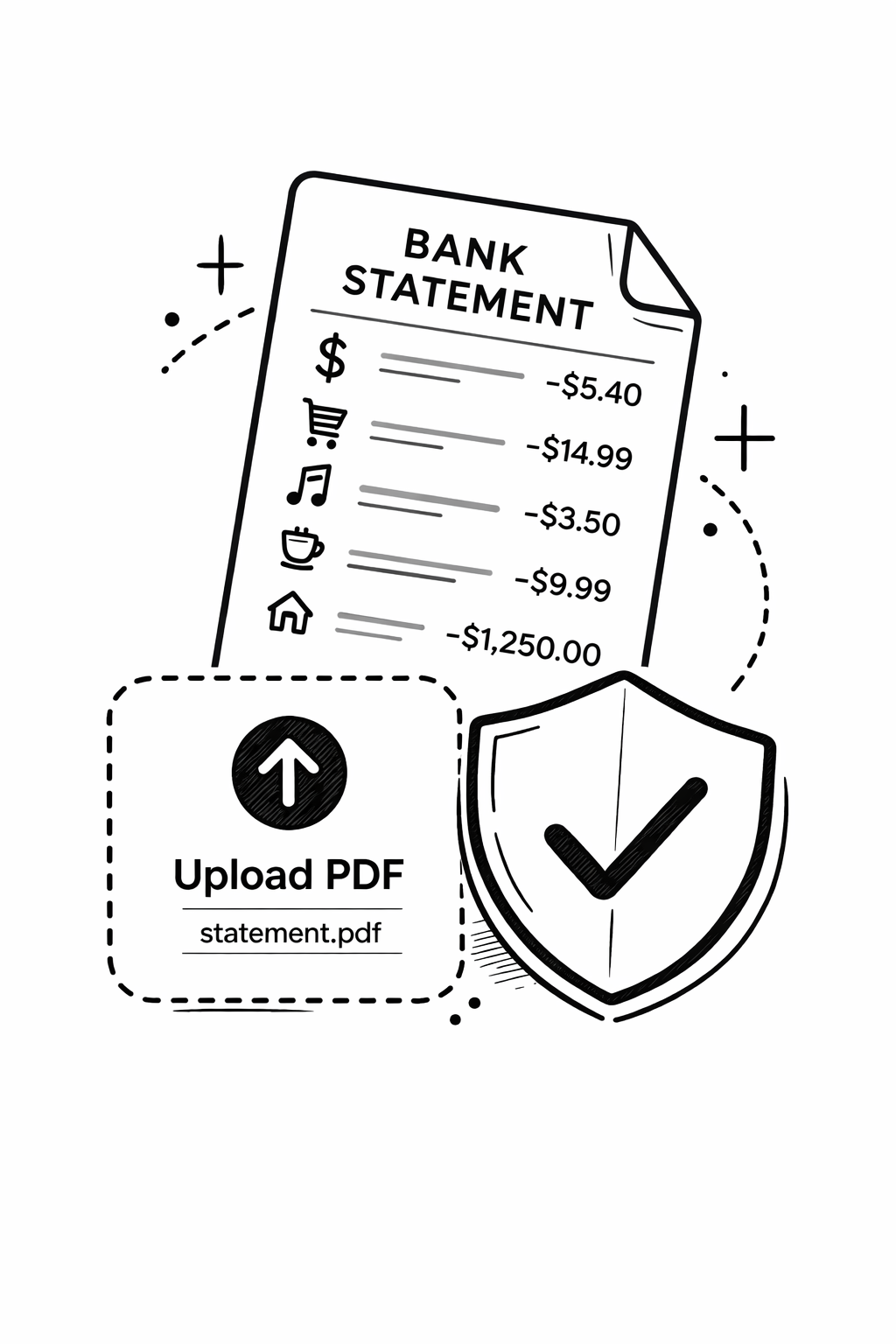
Free tool · 30 seconds · No signup
See your real grocery spending — upload your statement
AI separates grocery spending from dining out, delivery apps, and other food categories. Know your real number in 30 seconds.
Frequently Asked Questions
How much should I spend on groceries per month?
The USDA recommends $275-350/month for a single adult on a moderate plan. Couples typically spend $500-700. Families of four average $800-1,200. If you are spending significantly more, there is room to optimize without sacrificing nutrition or enjoyment.
Are store brands really as good as name brands?
In most cases, yes. Store brands are often made by the same manufacturers as name brands. Consumer Reports and blind taste tests consistently show that store brands match or beat name brands in quality. The exceptions are specialty items where brand formulation matters (certain condiments, coffee, etc.).
How much can meal planning save?
Meal planning typically saves 20-30% on groceries by reducing impulse purchases, food waste, and last-minute takeout orders. For a household spending $800/month, that is $160-240/month in savings — or $1,920-2,880 per year.
What is the best day to buy groceries?
Wednesday is typically the best day. Most stores start new sales on Wednesday while still honoring the previous week's deals. Early morning or late evening visits tend to have fewer crowds and more markdowns on perishables nearing expiration.
How do I know if I am spending too much on groceries?
Upload your bank statement to see your actual grocery spending over the past month. Compare it to the USDA guidelines for your household size. If you are 30% or more above the moderate plan, there are likely easy wins to capture.