Find insurance debits
Upload the statement to flag NGIC, NATL GEN, Allstate, and other recurring insurance payments.
No signup · deleted after analysis
ACH National General Payment (and “ACH Hold National General”)
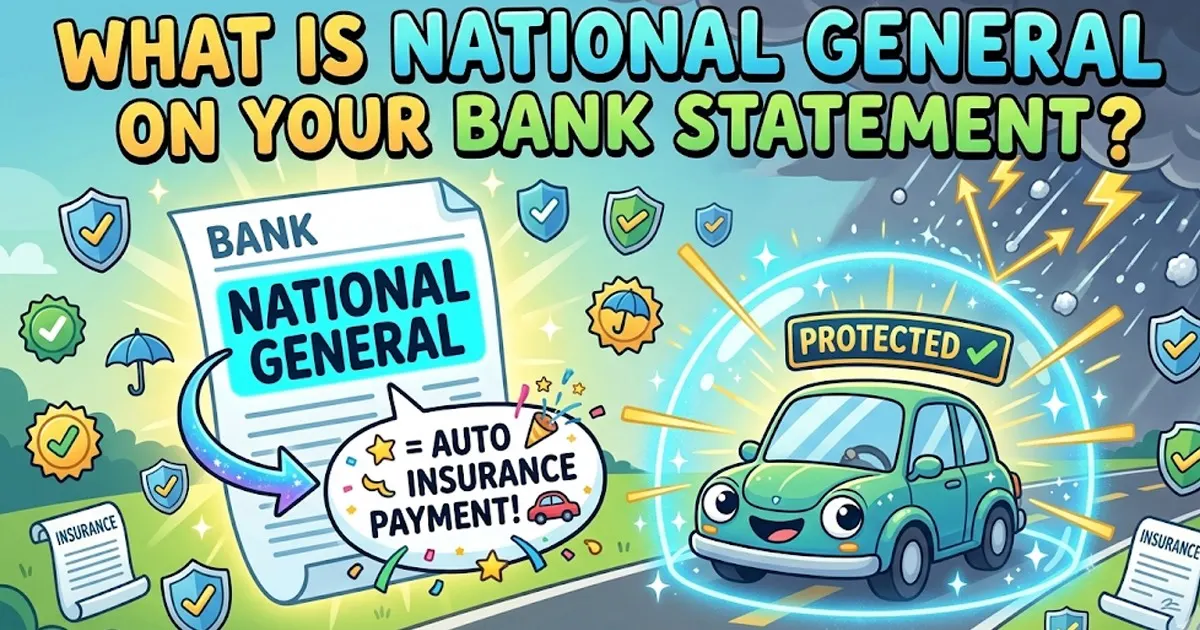
An ACH National General payment is an electronic premium debit from National General Insurance Company. The money is pulled directly from your checking account through the ACH network — not your credit card. An “ACH hold” means the debit is pending and your bank has earmarked the funds but they haven't cleared yet.
ACH National General = a scheduled insurance premium debit pulled directly from your checking account by National General Insurance (now an Allstate subsidiary). An “ACH hold” just means the debit hasn't fully cleared yet; it usually clears within 1–3 business days.
Free tool · no signup
Decode your ACH National General descriptor
Paste the line to identify whether it's an auto, home, or supplemental policy debit and get the right cancel hotline.
Descriptor explainer
Paste one raw line from the statement. This tool is for one descriptor, not the whole document.
Card purchase, bill, or outgoing movement
Looks like an Amazon retail, marketplace, Prime, digital, or Whole Foods descriptor. Common variants: AMZN MKTP, AMAZON.COM, AMZNPrime, Amazon RETA, Amazon Digital, AMZN Digital Svcs.
Best manual read from the pasted descriptor.
Pattern-match confidence, not a guarantee.
Check Amazon order history, digital orders, Prime renewals, Subscribe & Save shipments, and family member purchases.
Usually legitimate, but the underlying merchant may be hidden or abbreviated.
Why ACH National General payments appear
You see an ACH National General debit when you have an active National General policy on EFT (electronic funds transfer) auto-pay. The most common reasons:
- You chose checking-account auto-pay instead of card billing — usually for a small discount
- You set up monthly ACH withdrawals on a 6-month auto policy (six recurring debits)
- A policy renewed automatically and the new term's premium was pulled via ACH
- You signed up for supplemental coverage (accident, hospital, dental) through Allstate Health Solutions
- An independent agent set up EFT billing as the default when you bought through a comparison site
“ACH hold” vs “ACH debit” vs “ACH pending”
These three labels all describe the same ACH lifecycle at different stages:
- ACH pending / ACH hold — National General has submitted the debit; your bank has earmarked the funds but they haven't left your account. Usually 1–3 business days.
- ACH debit (posted) — the funds have left your account and the transaction is final.
- ACH return — the debit failed (insufficient funds, closed account, stop payment) and was returned to National General. Expect a follow-up communication.
How to stop ACH National General debits
- Cancel the auto-pay with National General first — log in at nationalgeneral.com or call 1-888-293-5108. This is the cleanest path because the underlying authorization is removed.
- If you need to stop a debit fast, file a written ACH Stop Payment Order with your bank (most banks charge $20–$35 and the stop must be filed at least 3 business days before the scheduled debit).
- If the debit was already pulled and unauthorized, you have up to 60 days from the statement date to dispute under federal Regulation E. Sign your bank's “unauthorized ACH” affidavit and you should get a full reversal.
- Cancel the underlying policy if you find one you didn't authorize, or the debits will keep recurring even after a one-off stop payment.
Related NGIC reading
- National General payment on bank statement — full guide
- What does NGIC stand for? (NGIC payment meaning)
- NATL GEN INS charge on credit card — what it is and how to verify
- How to cancel National General insurance
Want to see every ACH debit on your statement at once? Upload your PDF to our free bank statement analyzer — it groups ACH debits by merchant so you can spot any unauthorized National General pulls immediately.
Free tool · 30 seconds · No signup
Need to identify another statement line?
Paste the descriptor or upload the statement to decode deposits, fees, merchant aliases, and unfamiliar charges.